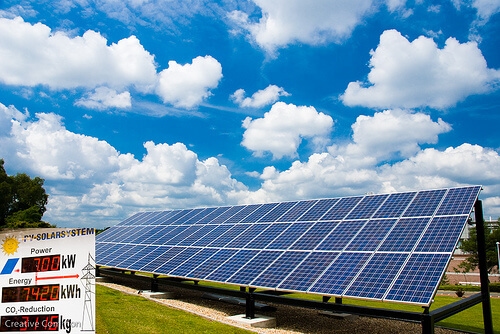
New Block Copolymer Solar Cells Shows Promising Results

A small team of researchers at the Rice and Pennsylvania State universities has developed a new solar cell that is based on organic block copolymers. The research and the new solar cell have led to the possibility of an entirely new class of solar panels.
The organic block copolymers are compounds that self-arrange into certain layers that are effective at absorbing sunlight, and are significantly better at doing so than other substances that uses polymer as their main ingredient.


Depending on which solar panel type (mono-, polycrystalline or thin-film), the best solar panels usually range between 15-20%. Individual solar cell efficiencies are usually a bit higher than this. Researchers have actually pushed cell-efficiencies up to 43.5%.
The research team at the Rice and Pennsylvania State universities has so far not achieved an efficiency rating higher than 3%, but the exciting part is that the organic block copolymers are cheap, which in the long run could mean a new type of solar panel that can compete on the market.
The new solar cell consists of a block copolymer that arranges itself into bands with a thickness of about 16 nanometers. A layer of aluminum is put on the other side. Electrodes at the top and bottom enable current to flow through the device.
“On paper, block copolymers are excellent candidates for organic solar cells, but no one has been able to get very good photovoltaic performance using block copolymers. We didn’t give up on the idea of block copolymers because there’s really only been a handful of these types of solar cells previously tested. We thought getting good performance using block copolymers was possible if we designed the right materials and fabricated the solar cells under the right conditions.” Says project leader and Rice chemical engineer Rafael Verduzco.
Researchers were already experimenting with using polymer components for solar cells back in the 1980s, but so far we have yet to see any breakthroughs come out of the research. It will be interesting to follow the research of block copolymer solar cells in the coming months and years. If you take a look at acomparison of solar panel efficiencies in 2013, a cell efficiency of 3% is far from exciting news. On the other hand,  a cell based on an organic polymer would be significantly cheaper than one that is silicon-based. Maybe they`re actually onto something?

Kako iskoristiti PET anbalažu , a pritom pokriti krov


Solarni kolektor: Green Deal Provider, Enact, goes bust

Solarni kolektor: Green Deal Provider, Enact, goes bust: The Green Deal has suffered its first major business casualty, just four month’s after the Government’s flagship energy efficiency scheme...

Green Deal Provider, Enact, goes bust


The Green Deal has suffered its first major business casualty, just four month’s after the Government’s flagship energy efficiency scheme launched.

Cornwall-based Green Deal Provider Enact Energy Renewables has gone into administration, with 29 job losses.

Ian Walker and Christopher Norman from the Exeter office of Begbies Traynor were appointed joint administrators of Enact on May 30. They said in a statement: "29 members of the company's staff were made redundant […] on account of the company’s insolvency" and the joint admininstrators will now seek to find "a purchaser for some or all of the company’s business undertaking and assets."

"Well regarded"
It is still unclear what caused Enact to enter into administration, but the company, which was established in 1996 to provide renewable energy and energy saving upgrades to households, is described by one leading industry figure as "well regarded". It was the first company in Cornwall to be accredited as a Green Deal Provider and company management met with Ed Davey, Secretary of State for Energy and Climate Change, as recently as April to discuss the Green Deal. 

A Department of Energy and Climate Change (DECC) spokesperson told GreenWiseofficials were still trying to establish the facts before commenting. However, the news is bound to be a blow for the Government, which launched the Green Deal in order to insulate 14 million homes by 2020. Enact’s fate will be of particular embarassment to the Prime Minister David Cameron, whose new energy advisor, George Eustice, is MP for Cornwall. 

Last week, it emerged that the number of cavity wall insulations has collapsed since the launch of the Green Deal. And despite nearly 9,000 Green Deal assessments being lodged by the end of April, unofficial reports suggest the scheme is struggling to convert assessments into Green Deal Plans, the financial arrangements homeowners enter into with Green Deal Providers to pay for energy saving upgrades to their properties. 

As a Green Deal Provider, Enact was able to offer access to Green Deal funding and finance options to homeowners. According to the companies’ website, before becoming a Green Deal Provider, Enact had undertaken over 300,000 energy efficiency upgrades across the UK by installing solar, loft and cavity wall insulations and heating upgrades.

"This well regarded company is just the latest casualty in an alarmingly long line of those who took at face value the commitment to ensure a seamless transition between the various energy saving programmes abandoned at the end of 2012 - Warm Front, CERT, CESP - and the brave new world of the ECO and Green Deal. One in four of those who were employed last December in installing insulation have now lost their jobs," said Andrew Warren, director of the Association for the Conservation of Energy. 
 
Additional measures
John Alker, director of policy and communications at the UK Green Building Council, said it was too early to draw wider conclusions for the Green Deal from this one case, but the Government should be taking additional action to support the Green Deal market. 

"It’s a great shame when any company goes into administration, especially one providingenergy efficiency and renewables services for over a decade. But I don’t think we can extrapolate too much from just one example, and say there are lessons for the Green Deal more widely – particularly when we don’t have any further information," he said. "Needless to say, everyone would like there to be a much more certain market for Green Deal Providers – which is why we have been campaigning so strongly for additional financial incentives for consumers to take it up."

5 Ways The Military Is Looking Towards Renewable Energy


The U.S. Military is all about efficiency and effectiveness. In the eyes of the military, the best way to approach any operation is one in which the greatest amount is accomplished by using as few resources as possible. These ideals and parameters fit into the profiles for all of the renewable energy systems that are being developed today. As the military adopts renewable energy, they are able to get jobs done more cheaply and with less strain on the equipment that is already spread very thin.

Net Zero Initiative

This military initiative is meant to drastically lower the carbon emissions being produced by military personnel and military operations. The ideals are based on an inverted pyramid of concerns. At the top of the pyramid is Reduction. Under this idea is Re-Purposing, followed by Recycling and Composting. Energy Recovery is next, resting on top of the pyramid’s smallest component which is Disposal. Heads of U.S. forces in the southeast cite climate change as a primary reason for adopting the program. It is currently making its fastest advances in the technologies used to recycle water and dispose of human waste.

Fossil Fuels Cost the American People

The military is striving to move away from vehicles that use fossil fuels because of the expense of acquiring and transporting these gases. Fossil fuels are not just going into transportation vehicles. The military has been using them to run generators in addition to many other applications in the field. The estimates suggest that using generators to run air conditioners alone in desert regions occupied by the military racks up bills that are close to $20 million. The fluctuation of the markets for fossil fuels is also burdensome on estimating the military budget. A rise in the cost of fuel by $1 translates into a $130 million dollar rise in military expenses over a one year period.

Reducing Dependence and Supply Lines

The U.S. military is the single biggest consumer of energy and oil on the entire globe. Using so much energy requires that they haul around supply lines, truck liquid fuels, and deliver resources via helicopter to various parts of the globe. Military operation extend far beyond combat. They involve disaster relief and peacekeeping efforts as well. These efforts are all more successful when they are not hindered by late fuel deliveries or sieges. Part of eliminating this variable involves making great use of solar and wind power.

It Starts Domestically

All bases in the United States are making the transition to completely electric vehicles. As part of the Pew Project, executive orders and various legislation is attempting to create a military culture that makes good financial sense. The plans include transitioning bases into a position where they have a fleet of over 200,000 electric cars and trucks on hand. The bases will include charging stations for these vehicles in addition to hybrid vehicles as well. The plans have already been rolled out in five states. The maintenance on these types of vehicles is reduced, and the military has found additional uses for their charged batteries in various applications.

The Sun Shines Everywhere

Solar power is currently the backbone for the military efforts regarding renewable energies. The marines and other units deployed throughout the world are now being equipped with portable, large-scale solar-panel modules. These modules are replacing the batteries that, at one point, were standard equipment. The old batteries could last three to four days. The solar panels are lighter, and they allow troops to stay in the field for three and four weeks at a time without any further need for supplies.

World’s largest solar power plant opens with 100MW capacity


"World´s largest solar power plant opens with 100MW capacity" />The United Arab Emirates has opened the “largest concentrated solar power plant in operation anywhere in the world” in Abu Dhabi with their 100-megawatt solar-thermal project, according to Daily Mail UK. This $600million project—which took three years to complete—is believed to have the ability to power 20,000 homes in the country and in turn, reduce carbon emission by 175,000 tons.

“Incorporating the latest in parabolic trough technology, the plant features more than 258,000 mirrors mounted on 768 tracking parabolic trough collectors, covering an area of 2.5 sq/km, or 285 football fields,” writes The Daily Mail UK of the project. ”By concentrating heat from direct sunlight onto oil-filled pipes, Shams 1 produces steam, which drives a turbine to generate electricity. In addition, the solar project uses a booster to heat steam as it enters the turbine to dramatically increase the cycle’s efficiency.”

And because solar power is generated during peak demand the UAE is able to reduce the need for ‘peak shaving’ generators, which are expensive and idle most of the year.

Masdar, Abu Dhabi’s renewable energy company, partnered with French energy company Total and Spain’s energy infrastructure company Abengoa to build the plant.

“The Middle East holds nearly half of the world’s renewable energy potential,” said Santiago Seage, CEO of Abengoa Solar, an energy infrastructure company that built the plant. “The abundance of solar energy is an opportunity to integrate sustainable, clean sources of power that address energy security and climate change.”

“The region needs more projects like Shams 1, and we look forward to pushing the boundaries of future energy.”

Kako napraviti solarni panel


Kako se rade solarni paneli

polikristalna fotonaponska ćelija
U prijašnjim uputstvima vezano za obnovljive energije govorili smo o energiji sunca i o načinu na koji se iz energije sunca dobiva električna energija.
Ovaj puta ćemo se nešto više zadržati na detaljnom objašnjenju najvažnijeg elementa koji se nalazi u solarnim panelima a to je solarna ćelija.
Postoji više vrsta solarnih ćelija:
  • amorfne ili tankoslojne solarne ćelije
  • polikristalne solarne ćelije
  • monokristalne solarne ćelije

Prve dvije vrste solarnih ćelija koje smo nabrojili imaju nešto manju iskoristivost dok su monokristalne solarne ćelije daleko bolje riješenje. Monokristalne ćelije imaju heksagonalan oblik i mogu proizvesti više energije, imaju nešto višu cijenu.
Sve vrste ćelija se mogu kupiti čak i odvojeno, te ih mnogi ljudi znaju sastavljati u solarne panele kod kuće koristeći potreban alat za taj posao.
Primjerice, neke od solarnih ćelija možete pronaći na internetu i sami ih pokušati zalemiti u sklopu vaših malih kućnih eksperimenata za edukaciju. Da biste uspjeli sami sastaviti solarni modul trebat ćete sljedeće:
  • solarna ćelija
  • žica za povezivanje ćelija – tab wire
  • žica za povezivanje svih ćelija – bus wire
  • olovka za čišćenje kontakata – flux olovka
  • žica za lemljenje
  • kvalitetnija lemilica

Povezivanje solarnih ćelija

U ovom uputstvu ćete saznati više o povezivanju polikristalnih solarnih ćelija. Da biste povezali polikristalnu solarnu ćeliju morat ćete je zalemiti u seriju. Pojedina ćelija daje određenu voltažu ovisno o dimenzijama i specifikacijama.
U našem slučaju se radi o polikristalnoj solarnoj ćeliji koja sama proizvodi 1.5 V (volti), te da biste mogli napuniti akumulator od 12 V trebat ćete zalemiti set od 36-40 komada.
Solarne ćelije povezujemo uz pomoć specijalne plosnate bakrene žice koja je presvučena sa lemom koji je štiti od oksidacije. Ovakva žica se lemi na ćelije sa donje strane a zatim sa gornje strane.
Većina ovih solarnih ćelija ima negativan pol na prednjoj strani i pozitivan pol na stražnjoj strani. Solarne ćelije lotamo najprije sa prednje strane koristeći specijalnu žicu za povezivanje solarnih ćelija, eng(tab wire, tabbing wire).
žica za povezivanje solarnih ćelija
Ova žica je obično širine 1.6 do 2 mm debljine 0.12 mm materijal žice je bakar presvučen sa tinolom koji spriječava oksidaciju.
Teoretski ova žica se može zalemiti samo pritiskom sa lemilicom na žice koje se nalaze sa prednje strane fotonaponske ćelije, međutim ipak ćete morati staviti malo tinola.

Lemljenje kontakata solarnih ćelija

čišćenje kontakata na površini solarne ćelije  prije lemljenja
čišćenje kontakata
Prije nego počnete lemiti potrebno je sa olovkom flux-olovka povući linije po žicama gdje ćete lotati.
Ova olovka će vam očistiti površinu od masnoće i tinol će se jače uloviti za kontakte.
lemljenje žice
lemljenje žice
Prije samog starta pobrinite se da odrežete dovoljno dugačke žice za vaš projekt.
Izmjerite koliko vam trebaju duge žice da biste umrežili dovoljno solarnih ćelija za vaš solarni modul.
Sa lemilicom je potrebno zalemiti žicu po cijeloj dužini kontakta.
Pri ovom poslu je dobro pridržati žicu sa željeznim predmetom kako si ne biste opekli prste.
Ovaj posao bi trebali raditi svi oni koji imaju spretne ruke i puno strpljenja. Nakon što ste zalemili prednju stranu solarne ćelije presavinite žice i zalemite ih na stražnju stranu druge solarne fotoćelije.
Sa stražnje strane druge solarne fotoćelije imate po tri kontakta koje najprije očistite sa flux-olovkom za čišćenje kontakata.
Na svaki kontakt je potrebno dodati malo tinola te zalemiti žice.
lemljenje solarnih ćelija odozdo
Kada ste zalemili sve kontakte na stražnjoj strani potrebno je ćelije odnesti na sunce i isprobati da li daju struju. Ako povezivate puno solarnih ćelija dobro je postepeno provjeravati da li je sve kako treba jer jednom kada sve spojite je pre kasno.
Ovaj posao ćete izvesti na način da spojite žicu na stezaljku negativnog pola na ispitivaču struje, te pozitivan pol na bilo koji kontakt ispod prve solarne ćelije.
provjera napona na solarnim ćelijama
provjera napona na spojenim solarnim ćelijama

Postavljanje solarnih panela

Iako je ovaj posao dosta jednostavan, potrebno je puno prakse da biste uspješno zalemili solarne ćelije u module. Nakon svega potrebno je te module nekako zaštititi te ih postaviti u staklo i zasilikonirati kako nebi ulazila voda iznutra.

Činjenice o solarnoj energiji

Činjenice o solarnoj energiji. Solarna energija je obnovljivi izvor energije. Pročitajte neke zanimljive činjenice o solarnoj energiji.
Sunce je nama najbliža zvijezda te, neposredno ili posredno, izvor gotovo sve raspoložive energije na Zemlji. Sunčeva energija potječe od nuklearnih reakcija u njegovom središtu, gdje temperatura doseže 15 milijuna °C. Radi se o fuziji, kod koje spajanjem vodikovih atoma nastaje helij, uz oslobađanje velike količine energije.
Svake sekunde na ovaj način u helij prelazi oko 600 milijuna tona vodika, pri čemu se masa od nekih 4 milijuna tona vodika pretvori u energiju. Činjenice o solarnoj energiji:
  • Sunce proizvodi energiju već pet milijardi godina i prema trenutnim procjenama ta proizvodnja energije nastavit će se još idućih pet milijardi godina. Solarna energija je dio energije proizvedene na Suncu koji stiže do zemlje.
  • Solarna energija može se direktno konvertirati u toplinsku energiju ili u električnu energiju, a to su zapravo korisni oblici energije. Električna energija je najkorisniji oblik energije današnjem čovječanstvu jer se može jednostavno pretvoriti u koristan rad.
  • Solarna energija je „motor“ iza gotovo svih obnovljivih izvora energije. Sekundarni izvori energije koje pokreće solarna energija, poput energije vjetra, energije valova, hidroenergije i biomase, čine većinu obnovljivih izvora energije na zemlji. Geotermalna energija i energija plime i oseke nisu sekundarni proizvod solarne energije jer bi postojale i bez solarnog zračenja.
  • Noću i za vrlo oblačnih dana solarna energija nije potpuno dostupna i potrebni su sustavi za spremanje energije koji se pune kad je energija dostupna. Solarna energija može se spremati u različitim oblicima, ali najpopularniji su konverzija u toplinsku energiju, spremanje u baterijama i akumulatorima te „pumped storage“ sistemi – pumpanje vode na više mjesto kad postoji dovoljno energije i korištenje te vode kad solarna energija nije dostupna.
  • Solarna energija je obnovljivi izvor energije jer se ne može potrošiti poput fosilnih goriva. Solarna energija također je i vrlo čist izvor energije nakon instalacije jer nema štetnih emisija ili zagađenja nastalog zbog upotrebe solarnih panela ili solarnih ćelija.
  • Postoje tri osnovne vrste solarne energije:
    • Solarni paneli – Izravna pretvorba solarne energije u toplinu. Većinom se koristi za grijanje vode.
    • Koncentriranje solarne energije – Usmjeravanje solarnog zračenja upotrebom polja zrcala u jednu točku u kojoj se neka tekućina zagrijava na visoku temperaturu. Ovako zagrijana tekućina koristi se onda za proizvodnju električne energije. Ovo je osnovni način rada u današnjim solarnim elektranama.
    • Solarne ćelije – Pretvorba solarne energije direktno u električnu energiju.

Činjenice o solarnoj energiji.
  • Ugrubo možemo procijeniti da površina zemlje prima otprilike 100.000 TW solarne snage u svakom danom trenutku (gornji slojevi atmosfere primaju oko 174.000 TW, ali plinovi, oblaci, zagađenja i ostali čimbenici smanjuju dostupnu snagu na površini zemlje). Cijela populacija Zemlje koristi oko 400 qbtu energije svake godine, a da bi se dobila tolika količina energije potrebna je konstantna snaga od 13,38 TW – to je oko 8000 puta manje od snage koju dobivamo od sunca u svakom trenutku. Iz brojki iznad možemo izračunati da zemlja u 71 minutu primi dovoljno solarne energije da zadovolji energetske potrebe čovječanstva za cijelu godinu.
  • Solarna energija je glavni izvor energije za satelite i svemirske sonde nakon lansiranja. Na primjer, najnoviji GPS sateliti (Block IIR) koriste solarne ćelije snage 1136 vata. Solarne ćelije se gotovo uvijek koriste u kombinaciji s baterijama da bi se izbjegao ispad napajanja kad satelit ili sonda nije u položaju od kud se vidi Sunce.
  • Otprilike 30% ukupne potrošnje energije svodi se na grijanje vode. Iz toga je vidljivo da možemo znatno smanjiti ovisnost o vanjskim izvorima energije upotrebom solarnih panela. Za grijanje vode nema potrebe koristiti skupe solarne ćelije koje bi proizvodile električnu energiju koja bi se kasnije koristila za grijanje vode.
  • Solarna energija je vrlo čist izvor energije nakon instalacije, ali postoje neke zabrinutosti glede čistoće postupka proizvodnje solarnih ćelija. Solarne ćelije su u mnogočemu direktno povezane s proizvodnjom poluvodiča, a ta proizvodnja ima otrovne nusproizvode koji mogu ugroziti živa bića. U proizvodnji poluvodiča također ima i emisija stakleničkih plinova.
  • Solarna energija će se u budućnosti znatno više koristiti jer se očekuju rezultati znanstvenih istraživanja koji bi trebali smanjiti cijenu i povećati efikasnost ovoga izvora energije.
  • U godinama provedenim u Vatikanu, Leonardo Da Vinci (1452 - 1519) planirao je industrijsku upotrebu solarne energije koristeći konkavna ogledala koja bi usmjeravala solarno zračenje i grijala vodu. U modernim vremenima ovaj princip se zove koncentriranje solarne energije i glavni je princip rada današnjih solarnih elektrana. Da Vinci je korištenje solarne energije planirao jer je bio zabrinut zbog uništenja šuma koje su u tadašnje vrijeme bile glavno gorivo. Zvuči poznato?

Solar panels like stickers


Scientists produce flexible solar panels that can be glued to all surfaces.

From technology solar cells on thin film (TFSC), have long been expected to completely change our energy future. The first prototype of such thin flexible solar panels that one day we can have on their gadgets, walls, windows, and even on clothing, have so far proved to be quite sensitive and fragile.

TFSC are produced by scientists at Stanford University, currently represent the best use of this technology, you will soon be able to truly find its place in all applications that futurists have predicted and scientific teams.

Their thin flexible solar panels can be placed on paper, plastic and glass, without the need for direct integration in these products, or may be attached as labels or as scientists say, decal, and also easy to separate and reuse.

Scientific work that led the research Chi Hwan Lee and his team published in the publication Scientific Reports, demonstrate technology that enabled them making such "sun label" that can be linked with a variety of gadgets, rechargeable batteries and generators, and thus allow their filling and power supply.

Authors of scientific research suggests that the use of their technology can be applied to all the moving power, smart clothes and electronic systems of the aircraft industry.

"Given that the process of bonding does not require any preparation at the desired surface, it entails great challenges for a variety of industries, says Lee, adding that their TFSC and also ultra-durable, and can be used on curved surfaces, such as tiles, helmets or mobile devices, and that process also reduces the cost of their installation and workmanship.

Scientists also believe that their technology can be applied to other electronics, such as a thin film circuits, transistors and LCDs.

Source: Mashable

WHAT IS RENEWABLE ENERGY?


WHAT IS RENEWABLE ENERGY?


 Renewable energy comes from natural sources that are constantly and sustainably replenished. Harnessing energy from the wind, sun, water, plants, and other renewable sources will put America on the path to a cleaner environment, energy independence, and a stronger economy. The technologies featured here can contribute to better air quality, reduce our reliance on fossil fuels and curb global warming, add good jobs to the economy and, when properly sited, protect environmental values such as habitat and water quality. Working together, policymakers, farmers and investors can help build a sustainable future for America and the planet.


Tags : human behavioral ecology , cornell human ecology , water companies , water company , oil future , energy price charts , sun and the solar system , the solar system the sun , solar system and the sun , the sun of the solar system , sun system solar , sun in the solar system

Green World


The Earth is losing its trees. Ethiopia, for example, is down to 3% forest cover. After trees are cut down, the land loses its fertility. Hunger and conflict grow. Biodiversity dwindles, and water supplies dry up. The deserts creep forward, hastening climate change. But there is something we can do.

2: The Plan

Plant trees. Lots of trees. Trees heal barren soil and increase food crops, helping people become self-sufficient. They remove CO2 from the air, and restore the environment for generations to come.


3: Act Now

Help people plant their future--and ours. We plant trees to restore the ecology and economy of some of the world's poorest places. We help communities develop sustainable livelihoods, return barren soil to fertility, nurture biodiversity, and preserve cultural values. Will you help?


Price decline of solar panels(sun and the solar system)


  Price drop Solar: Good for buyers, bad for producers

(Marin Pasarić, Tomislav Majanović) - The global solar industry is currently topical unexpected paradox; manufacturers barely tie ends meet, while for end consumers more optimistic forecasts.

Specifically, Lux Research yesterday released its latest industry analysis which predicts a large and rapid increase in the installed capacity of solar energy as 15.5% per year, while the producers anticipated earnings in 2016. not move from the dead point. In accordance with the aforementioned dynamics of falling product prices, Navigant Consulting report yesterday confirmed that the cost of solar panels this year have fallen by as much as 20 percent.Reports drop in prices associated with fierce competition among manufacturers of solar photovoltaic panels, which continuously reduces the cost per watt. For manufacturers of solar panels this means a reduction in margins and a reduction in care whether demand will be able to accept the totality of production capacity.For consumers, this means that the price drop will be installing solar roof panels will be cheaper than it ever was, but an increase in the so-called. Solar leasing that should take precedence over a clean purchase solar installations.Shay Kann, solar industry analyst with GTM Research's says: "Companies that will offer solar leasing option will be able to expand their business into new areas where this kind of projects otherwise would not have launched on." Current price drop yet they felt most companies dealing with selling and installing solar systems is customers themselves, since a large part of the solar "pie" goes on the actual installation of the system.Instead of buying panels, solar leasing consumers via pay a monthly fee that reduces the overall bill. It may be a pre-set fee that will be paid over 20 years or under contract to purchase energy that the consumer who rents the panel agrees to buy electricity at a price lower than the network.Companies that install or finance these projects except the mere possession of solar panels, earn money thanks to government incentives for renewable energy. Few companies in the U.S. began with the implementation of these projects in California that would then expand their business to more than 20 states.The path to a network parity? - Regardless of how solar energy is delivered to consumers, technology and higher production rates ultimately reduce the cost per watt of energy. If the price drop of solar installations continues, we can expect almost getting solar electricity at a price lower than that provided by network operators and distribution system that would come to power parity.Most just reaching parity bit is considered a milestone which will contribute to the wider adoption of this type of energy. But, according to Lux Research, for residential solar installations reaching power parity is expected only within a few years. In addition to increasing the adoption of this energy source, power parity will foster the development of additional solar leasing because more consumers will be interested in this type of installation.There are key drivers in the adoption of solar energy incentives and the current retail price of electricity. The report says Lux reasearch that "future projected increases retail cost of electricity will be sufficient to increase the demand for solar installations even in countries that do not have the incentives."Due to falling prices and reduced demand for solar installations in Germany, which is normally the largest global consumer of solar energy, the pressure to further reduce the cost of installation. As stated by Paula Mints, a solar analyst at Navigant Consulting, "The photovoltaic industry has to develop a business strategy that will not rely on incentives, but will be market competitive."Autor: © Portal croenergo.eu (M.P., T.M.)

How do Sun in the solar system

Free energy that the sun gives us every day, allows you to create SIP zarade.Sa solar plants on your roof, you can convert the solar energy into electricity and deliver it directly to your network operator HEP, with the purchase of electric power energije.Za checked you will get appropriate fee prescribed law on the purchase of electricity from renewable sources of Croatian.
1.Fotonaponski (solar) modules
Photovoltaic (solar) modules using photovoltaic cells made of multiple technologies.
Solar cells can be divided into three types according to the type of crystal that is used: monocrystalline, polycrystalline and amorphous. For the production of monocrystalline cells requires absolutely pure semiconductors. Monocrystalline rods are made of fused silica and then cut into thin plates.
This production ensures a relatively high degree of efficiency, which reflects in the price of products. Production of polycrystalline cells is cheaper manufacturing process, liquid silicon is poured into blocks which are then cut into slabs. Because of the casting in the cooling process, a change of the structure of crystals uzrekuje lower efficiency solar cells.
If a silicon film applied to other material types of glass or other carriers get called amorphous or "thin film" cells. The thickness of the layer reaches a thickness of a human hair, thereby reducing the cost of production due to lower material costs. New technologies that achieve excellent productivity in the outcome Thinfilm and mikroamorfa very similar to poly and single crystal.
Solar modules are created by joining cells in series or parallel, certainly connected in series modules provide a much higher voltage. After that they fit into Viniyl Ethyl-acetate and embedded in aluminum or steel frames and covered with a transparent glass front strane.Jamstvo producers is reflected in Trajan guarantees for modules of 10-25 years.
2.Inverteri (AC adapter)
Direct current produced by the solar cells can not be directly involved in the public network, so there are inverters that convert direct current to alternating current 0.23 / 0.4 KV
3.Priključno place
Network-connected solar power plants require a power point with a measuring device according to the standards of HEP.
4.Izmjenična electricity produced by the solar power plant connected to the grid and used by all consumers.

The sun of the solar system in theory and practice

Photovoltaics:
The word Photovoltaic is a combination of the Greek words for light and names physicist Allesandro Volta.
Defines the direct conversion of sunlight into energy through solar cells. The conversion process is based on fotoelekričnom effect discovered by physicists Alexandra Bequerela year 1839.
Photoelectric effect describes the release positivnih and negative charges when the light illuminate the surface.
How do solar cells
Solar cells are made of various semiconductor materials materijala.Poluvodići, which become electrically conductive when illuminated or heated but they act as insulators at low temperatures. The primary raw material for the production of the sand which is plentiful.
Over 95% of all solar cells produced in the world are made by SI (Si). As the second most common element on earth's surface silicon has the advantage that it is available in sufficient quantities and does not affect the environmental changes.
For the production of semiconductor solar cells are polluted so (doping) the deliberate release of chemical elements as the holder of a positive or negative naboja.Kombinirajući two semiconductor layers with different pollution resulting barrier, boundary between the two layers. On this border creates an internal electric field that causes the release of the carrier when cell osvjetljena.Kroz metal contacts can get an electric discharge, if the external circuit is coming to the flow of direct current.
Silicon cells are approximately 10x10cm in size, transparent anti-reflective film protects the cell and reduces losses due to reflection at the cell surface.
The output voltage of the solar cell is temperature-dependent, the higher the temperature the lower voltage less utilization. Utilization level defines the amount of light with converted into useful electrical energy.
Types of solar cells
Solar cells can be divided into three types according to the type of crystal that is used: monocrystalline, polycrystalline and amorphous. For the production of monocrystalline cells requires absolutely pure semiconductors. Monocrystalline rods are made of fused silica and then cut into thin plates.
This production ensures a relatively high degree of efficiency, which reflects in the price of products. Production of polycrystalline cells is cheaper manufacturing process, liquid silicon is poured into blocks which are then cut into slabs. Because of the casting in the cooling process, a change of the structure of crystals uzrekuje lower efficiency solar cells.
If a silicon film applied to the second matter tpa glass or other carriers get called amorphous or "thin film" cells. The thickness of the layer reaches a thickness of a human hair, thereby reducing the cost of production because of lower costs materijala.Iskoristivost amorphous cells is much lower than other solar cells. Therefore, the use of power equipment less power.
Solar modules are created by joining cells in series or parallel, certainly connected in series modules provide a much higher voltage. After that they fit into Viniyl Ethyl-acetate and embedded in aluminum or steel frames and covered with a transparent glass front strane.Jamstvo producers is reflected in Trajan guarantees for modules of 10-25 years.
Today's power modules ranging from 5W to 350W per module and razlikju the voltage 12/24/48 V modules by which must be adapted to other equipment.
The solar cells are no toxic substances do not produce smoke or make a noise, so very environmentally friendly. Electricity produced by the transducers is the same as in the household.
What happens when there is no sunca.Sustav is able to work autonomously with the stored energy in batteries (solar batteries). How long can we get to work daily spending budget and the amount of stored energy, which depends on the capacity and type of battery, maintenance and operational requirements and definitely on the cost of equipment.

Što su to obnovljivi izvori energije?


Svi smo mi dobili na uplatnicama od HEP-a naknadu za obnovljive izvore energije, prirodne energente.Dakle, obnovljive izvore možemo svrstati u nekoliko područja kao što su vjetrogeneratori, fotonaponske elektrane,biomasa,vjetar, hidroelektrane . Zadržat će mo se na dijelu koji nam je najdostupniji.Solarni fotonaponski sustavi daju vam više razloga da volite sunce. Poklanjaju vam potrebnu električnu energiju, štede novac i štite okoliš. Solarni sustavi su idealni za kleti, poljske kućice, vikendice, kampere i sve ljubitelje prirode koji bježe iz civilizacije.Solarni kompleti sadrže sve što je potrebno za proizvodnju ekološki čiste i besplatne struje u svim vremenskim uvjetima i kroz cijelu godinu. Solarni sustavi omogućuju da iskoristite snagu sunca, najveći i beskonačan izvor energije.Ovaj neiscrpan izvor energije dostupan je besplatno svugdje gdje sunce sja, korisnicima daje slobodu korištenja za svoja boravišta daleko od civilizacije.Za razliku nuklearnih i fosilnih izvora energije  ne zagađuju okoliš i traže vrlo malo održavanja.
Mrežno vezani ili komercijalni fotonaponski sustavi omogućuju povrat cijelokupne investicije sa određenom zaradom ovisno o području u kojem se sagradi elektrana.
Pravilnik o obnovljivim izvorima energije prepoznaje tri kategorije Sunčanih ili Fotonaponskih ili Solarnih Elektrana u sustavu povlaštenog proizvođača električne energije.

Solarni kolektor od limenki


Da li ste znali da 175·10^9 MW solarne energije dođe do zemlje? Snaga koja je 10^5 (deset na peti) puta veća
od snage svih elektrana na našoj planeti!
Genijalno rješenje prikazano na ovom websajtu poslužilo je kao inspiracija da se u kućnim uslovima napravi efikasan
solarni panel sa ciljem da se iskoristi bar dio ovog nepresušnog bogatstva. U pitanju je nevjerovatno jednostavan i jeftin solarni
kolektor za dopunsko grijanje kuće, koji direktno zagrijava zrak. Najinteresantnije je to što je solarni panel skoro u potpunosti
napravljen od praznih aluminijumskih limenki!


solarni panel samogradnja

Kućište za solarni kolektor napravljeno je od drveta (šper-ploča 15mm), dok je njegova prednja strana od pleksiglasa/polikarbonata (možete koristiti i kaljeno staklo), debljine 3 mm (0,12 inča). Na zadnjoj strani kućišta postavljena je staklena vuna (možete koristiti i stirodur 20mm) kao izolacija.
Solarni apsorber je izradjen od pivskih i limenki sokova koje su ofarbane mat-crnom bojom otpornom na visoke temperature. Gornji dio (poklopac) limenke je posebno oblikovan da bi se dobila veća efikasnost prilikom razmjene topline izmedju limenke i zraka.
Kada je sunčano, bez obzira na vanjsku temperaturu, zrak u limenkama se zagrije veoma brzo. Ventilator vraća ugrijani zrak nazad u prostoriju koju grijemo.

SOLARNI KOLEKTORI OD LIMENKI ZA GRIJANJE KUĆE 

POSTUPAK IZRADE SOLARNOG PANELA

Za početak smo prikupili prazne limenke od kojih ćemo sastaviti solarni panel. Potrebno je oprati limenke odmah, jer veoma brzo počnu da šire neprijatne mirise. Pažnja! Limenke se generalno prave od aluminijuma, ali postoje i neke od željeza. Limenke možete testirati pomoću magneta.

Na svakoj limenci smo ekserom obilježili tri rupe, a zatim izbušili dno pomoću alata prikazanog na slikama 2 i 3.
Potrebno je obratiti pažnju na to da što preciznije isječete i formirate mala peraja na vrhu svake limenke. Njihov zadatak je da podstaknu turbulentni protok zraka unutar cjevi solarnog panela, tako da zrak pri prolasku prikupi što više topline sa zagrijanog zida limenke. Znači, pažljivo isjeći vrh limenke u obliku zvjezde, a zatim iskriviti djelove pomoću klješta (slika 1). Sve ovo je neophodno obaviti pije ljepljenja limenki.


Uradi sam seckanje limenke za solarni panel Uradi sam Jeftin solarni kolektor Samogradnja solarni kolektor od limenki
Slika 1
Slika 2
Slika 3
UPOZORENJE! Ovaj postupak je izuzetno opasan jer su zidovi limenke veoma tanki.
Oštri djelovi mogu izazvati povrede ruke.
Kada je bušenje završeno, može se desiti da deo isječenog metala ostane na konzervi. Preporučljivo je koristiti klješta kako bi se odstranili ovakvi djelovi lima.

Nemojte vaditi djelove lima, opiljke i krhotine rukama!
Uklonite masnoću i prljavštinu sa površine konzerve. Bilo koje sintetičko sredstvo za odmašćivanje će sasvim dobro poslužiti za ovu namjenu. Odmašćivanje obavite isključivo napolju ili u dobro provetrenoj prostoriji.

 UPOZORENJE! Ovaj postupak je zapaljiv i postoji potencijalna opasnost od eksplozije!
Krajnje je opasno ovo raditi u blizini otvorenog plamena ili zapaljene cigarete!!!
Zaljepite limenke bilo kojim ljepilom ili silikonom otpornim na visoke temperature, bar do 200 °C. Postoje i proizvodi za lepljenje koji mogu da izdrže čak do 280 °C ili 300 °C.Poklopac limenke i dno druge limenke savršeno prijanjaju jedno na drugo. Stavite ljepilo/silikon na rub limenke i pritisnite dno druge limenke na nju. Na ovaj način ljepilo/silikon neće pobjeći sa ivice. Detalj presjeka ljepljene limenke možete vidjeti na slici 4,a gotovi i zaljepljeni nizovi limenki su prikazani na slici 5.

presek limenki za solarno grejanje solarni panel od limenki sablon za slaganje solarnih limenki
Slika 4
Slika 5
Slika 6
Pripremite šablon za slaganje limenki - prikazan na slici 6. Možete iskoristiti dvije najobičnije ravne daske i spojiti ih ekserima. Šablon će obezbjediti oslonac tokom sušenja limenki kako bi se dobila ravna cijev - solarni tunel. Dodatno pričvrstite limenke za šablon pomoću gumica za tegle.
lepljenje solarnih limenki za kolektor niz limenki uradi sam solarni panel solarni paneli za kuće
Slika 7
Slika 8
Slika 9
Slike 7, 8 i 9 prikazuju procese spajanja i ljepljenja. Niz zaljepljenih konzervi formira solarnu cijev. Slika 10 prikazuje cijev koja mora biti fiksirana i nepomična dok se ljepilo u potpunosti ne osuši.
niz solarnih limenki za kolektor
Slika 10
Kutije usisnog i izpušnog dijela se izradjuju od drveta ili 1mm aluminijuma (slike 11 i 12); praznine na ivicama su popunjene sa ljepljivom trakom otpornom na toplinu ili silikonom. Poklopci kutija imaju izreze od 55mm napravljene stacionarnom bušilicom. Izbušeni dijelovi se mogu vidjeti na slikama 12 i 13. Prvi red konzervi je zaljepljen na poklopac usisne kutije, pogledajte kako izgleda kada su svi dijelovi sastavljeni i kolektor pripremljen za farbanje (slika 13).

Ljepilo se jako sporo suši. Bitno ga je ostaviti da se suši najmanje 24 sata.
solarni kolektori od limenki - usisni deo solarni paneli od limenki - busenje solarni kolektori od limenki - sklapanje
Slika 11
Slika 12
Slika 13
Solarni apsorber staje u kućište kolektora napravljeno od drveta (slika 14). Poledjina kutije solarnog kolektora je od iverice. Da bi se konstrukcija dodatno učvrstila, mozete napraviti i unutrašnje pregrade od letvica. Izmedju pregrada postavite izolaciju - staklenu vunu ili stirodur. Sve ovo prekrijte tankom tablom iverice. Instaliran izolator možete vidjeti na slici 15. Obratite posebnu pažnju na izolaciju oko otvora za izlaz i ulaz zraka u solarni kolektor.
kuciste solarnog kolektora za grejanje kuce kuciste solarnog panela za grejanje kuce solarno grijanje panel solarno grijanje od limenki
Slika 14
Slika 15
Slika 16
Slika 17
Izvršena je priprema, zaštita i farbanje drveta od koga je kutija sastavljena. Takodje su postavljene i nosači na sva četiri čoška da bi se solarni kolektor mogao pričvrstiti na zid (slika 16) pomoću 10 mm vijaka (slika 17). Prazan okvir je postavljen na zid kako bi se precizno odredilo mjesto gdje treba štemanjem probiti zid i postaviti cijevi za dovod/odvod zraka.


solarni kolektor od limenki solarni panel od limenki solarni panel od limenki
Slika 18
Slika 19
Slika 20
Na kraju je solarni apsorber ofarban crnom bojom i postavljen u kućište. Kućište je prekriveno pleksiglasom koji smo pričvrstili za okvir i temeljno zalili silikonom. Polikarbonat/pleksiglas je blago konveksan u cilju dobijanja veće čvrstoće. Instaliran solarni apsorber možete vidjeti bez pleksiglasa na slici 18. Kompletan solarni kolektor je prikazan slici 19, i na kraju, instaliran solarni sistem možete vidjeti na slici 20.


Važna napomena: Ovakav solarni sistem ne može da akumulira toplinskuu energiju koju proizvede. Kada je sunčano, solarni kolektor proizvodi toplinuu, ali je neophodno da se ona odmah upotrebi za grijanje zraka unutar stambenog prostora. Ukoliko nema sunca potrebno je prekinuti dovod zraka u solarni kolektor, jer bi u suprotnom prostorija počela da se hladi. Ovo se može rješiti na jednostavan način - ugradnjom bespovratnog ventila čime ćete svesti gubitke topline na minimum.
Diferencijalni termostat kontrolira uključivanje i isključivanje ventilatora. Ovakav termostat možete kupiti u bolje opremljenim prodavnicama elektronskih komponenti. Uredjaj ima dva senzora. Jedan postavljen unutar gornjeg otvora za topao zrak, drugi unutar donjeg otvora za dovod hladnog zraka u solarni kolektor.
Ukoliko pažljivo podesite granične temperature, solarni kolektor može da proizvede u prosjeku oko 1-2 kW energije za grijanje. Ovo u principu najviše zavisi od toga koliko je sunčan dan.
Generalna proba solarnog kolektora obavljena je u dvorištu prije instalacije sistema na kuću. Bio je sunčan zimski dan, bez oblaka. Kao ventilator je korišten mali hladnjak izvadjen iz neispravnog napajanja za računalo. Nakon 10 minuta na suncu iz solarnog kolektora je izlazio vruč zrak temperature oko 70 °C! Rezultati testa su nas ponukali da što prije montiramo solarni kolektor na kuću.
Nakon završene montaže kolektora na zid kuće, pri tadašnjoj temperaturi od -3 °C iz solarnog kolektora je izlazilo 3 m3/min (3 kubika u minuti) zagrijanog zraka. U kućnoj varijanti je korišten ventilator veće snage od onog sa kojim smo vršili probu. Temperatura zagrijanog zraka je išla čak i do +72 °C. Temperatura je mijerena digitalnim termometrom. Za kalkulaciju grijane snage kolektora uzeli smo protok zraka, kao i prosiječnu temperaturu zraka na izlazu iz uredjaja. Proračunata snaga koju je davao solarni kolektor je bila približno 1950 W (vati) što je skoro 3 KS (3 konjske snage)!!!

U nastavku ču vam prikazati potreban materijal..


Specifikacija materijala za solarne panele


Sljedeća tabela prikazuje popis materijala potrebnog za izradu solarnog grijača od limenki. U dnu tabele možete vidjeti koliko nas je na kraju koštala izrada kompletnog solarnog panela. Naravno, ukoliko se potrudite da iskoristite dijelove koje već imate u podrumu ili garaži, konačna svota se može značajno umanjiti.


Solarni paneli od limenki-lista potrebnih delova
Nemojte zaboraviti da vam za izradu solarnog panela pored gore navedenog materijala trebaju limenke i, naravno, alat.